-
00:06 – Introduction
-
Key Points:
-
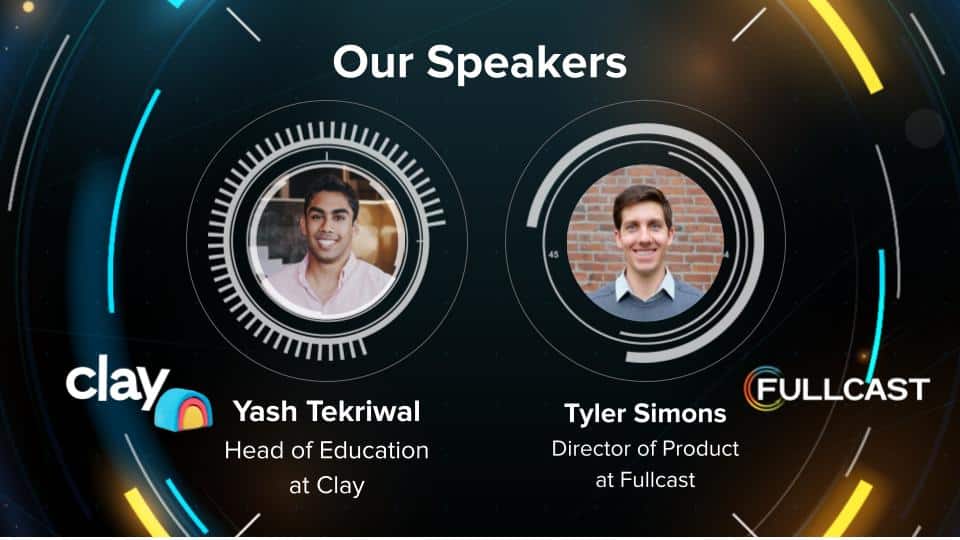
The webinar is hosted by Tyler Simons (GTM specialist) and Yash Techall (Head of Education at Clay).
-
They will discuss how to implement AI in a Go-To-Market (GTM) tech stack.
-
01:16 – Tyler’s Background
-
Key Points:
-
Tyler shares his experience in GTM strategy, product management, and how AI is being integrated into their platform.
-
02:17 – Yash’s Background
-
Key Points:
-
Yash talks about his work at Clay, highlighting how the company is at the intersection of AI, RevOps, and GTM processes.
-
02:51 – Introduction to AI in GTM
-
Key Points:
-
Discussion on the rise of AI tools in the GTM stack and their challenges.
-
AI is often viewed as an “Iron Man Jarvis” solution, but strategic integration is necessary for success.
-
03:23 – AI Tools Explosion
-
Key Points:
-
The sheer number of AI tools available can be overwhelming.
-
Without a strategic approach, AI tools may not lead to tangible results.
-
04:32 – The Challenge of Identifying Valuable AI Tools
-
Key Points:
-
Ease of creating AI tools is increasing, but differentiation between tools lies in user experience and brand reputation.
-
05:34 – AI Should Enhance Efficiency, Decision Making, and Personalization
-
Key Points:
-
AI should be integrated in ways that enhance efficiency, decision-making, and personalization for better GTM outcomes.
-
08:06 – Focusing on Problem-Solving with AI
-
Key Points:
-
The key to AI adoption is addressing specific problems (e.g., territory planning, lead scoring) rather than using it for its own sake.
-
Deterministic problems (e.g., math) are where AI shines; generative problems like territory planning need AI for better decisions.
-
12:52 – Refocusing on Human-Centered Work
-
Key Points:
-
AI should help remove manual work, allowing human resources to focus on tasks that require creativity and strategy.
-
14:16 – Starting with Data Enrichment, Not AI-Driven Outbound
-
Key Points:
-
While AI in outbound sales is a hot topic, starting with data enrichment tools (like Clay) and addressing bottlenecks is a more effective first step.
-
15:15 – AI’s Role in Efficiency
-
Key Points:
-
AI helps identify inefficiencies in the GTM process and find bottlenecks, improving lead conversion and decision-making.
-
17:01 – Leveraging Data for Decision-Making
-
Key Points:
-
There’s an overwhelming amount of data, and AI can help process it, allowing for better, more informed decisions.
-
18:48 – Personalization and AI in Outreach
-
Key Points:
-
AI can be used to personalize sales outreach, but it should augment existing processes, not replace the human touch in creating meaningful connections.
-
20:06 – AI SDRs (Sales Development Representatives)
-
Key Points:
-
The debate around AI SDRs: While AI can assist with lead generation, it shouldn’t completely replace human SDRs in most cases.
-
AI in sales should focus on augmenting processes, not fully automating them.
-
23:15 – The Future of AI and AI SDRs
-
Key Points:
-
AI SDRs may become more effective in the future, but current tools aren’t fully reliable yet.
-
The potential for AI to create more personalized interactions with prospects remains a major focus.
-
26:41 – Understanding and Engaging the ICP (Ideal Customer Profile)
-
Key Points:
-
AI can help businesses better understand and engage with their ICP by surfacing insights and streamlining the outreach process.
-
32:36 – The Role of AI in Data Enrichment
-
Key Points:
-
Clay uses AI for data enrichment and segmentation, allowing GTM teams to make more informed decisions and avoid manual data manipulation.
-
34:00 – AI in RevOps and Sales Enablement
-
Key Points:
-
AI is helping GTM teams automate data handling, which was previously time-consuming and error-prone.
-
40:00 – Training and Enablement
-
Key Points:
-
AI’s adoption can be hindered by a lack of training and proper enablement.
-
GTM teams should avoid overloading their teams with too many tools without proper understanding and training.
-
43:00 – Aligning AI Implementation with Company Goals
-
Key Points:
-
When implementing AI, it’s important to tie the tools directly to company goals and ensure they address actual problems in the GTM strategy.
-
47:45 – Closing Thoughts and Q&A
-
Key Points:
-
The webinar concludes with an open invitation to connect on LinkedIn and continue the discussion.
-
Yash and Tyler reflect on the evolution of AI and its impact on RevOps.
-
-
How to Win with AI in Your GTM Tech Stack